
Boki is an AI marketing operations platform built for content teams. It brings planning, briefs, writing, review, distribution, and attribution into one workspace and runs three specialist AI agents inside the editor.
William Imoh, the founder and CEO of Hackmamba, built it, and he reaches for a comparison developers will recognize:“We see Boki as the cursor for marketers, the same way cursor is for developers.” In plainer terms, Boki is an intelligent marketing operations platform.
The problem it addresses is one most content teams will know. The work scatters across tools that were never built to talk to each other. The brief lives in one place, the draft in another, the review happens in a third, and the social posts go out from a fourth. Each handoff loses a little context, and the people doing the work spend a real share of their week keeping the pieces lined up. Boki was built to remove that tax.
This is a walkthrough of what Boki is, how a content team moves a piece through it from plan to published, what each of its agents does, and where it fits. We built Boki at Hackmamba to solve a problem the team had themselves, so most of what follows comes from how they actually use it.
TL;DR
Boki brings planning, briefs, writing, review, distribution, and attribution into one workspace, and runs three specialist AI agents inside the editor: a Technical agent, a Marketer agent, and an LLM search visibility agent.
It was built at Hackmamba, and we use it to run our own client content operations. The free Starter plan covers 50 documents a month with no credit card.
What is Boki?
Beyond the cursor comparison, William’s fuller description gets at what the platform does: “Boki helps us go to market faster, and for folks that don’t know how to go to market, Boki’s agents direct them.”
A content team’s work has stages that include research, planning, briefs, writing, review, distribution, and tracking. Boki consolidates those stages into a single workspace where they share context. A brief knows which plan it belongs to, a draft knows which brief it answers, and a social post knows which campaign it came from. The belief William builds on is that AI should amplify what the team already knows rather than stand in for it. The agents carry the repetitive load, and the team makes the judgment.
Boki came out of our own operation at Hackmamba. We started as a content agency and grew into a developer growth company, and the goal William set was plain: “We wanted to 10x our output at Hackmamba without increasing headcount.” Along the way, we were running our marketing across Google Docs, Linear, Buffer, Planable, and a handful of AI assistants. That meant a row of open tabs to do one job. Boki collapses most of that into a single place, and the clearest way to see what that changes is to follow a piece of content through it.
How does Boki work?
You build a plan, attach briefs to articles within it, and a writer opens their article to find the brief already there, with the whole thing tracked from one view.
A content manager starts by creating a growth plan or a content plan. Boki’s agents help shape it, drawing on a directory of skills we built over the last 10 years of marketing and developer advocacy, along with the team’s own conviction about what works. The plan also draws on what is working in the market right now, reflecting current reality rather than last year’s playbook. A plan defines who the content is for, why the team is making it, and what kind of content it is. At this stage, the team can connect an MCP to expand the agent’s capabilities. They bring in the Ahrefs MCP, for example, so the agent can research which keywords to build content around, and the same MCP can later feed into reviews. As William puts it, connecting an MCP “just expands the capabilities of Boki.”
Once the plan is set, the manager and the developer marketer create content briefs, which the team uses to manage the work. The brief feature includes a preset set of fields that align with the team’s definition of a brief, covering the outcome, description, personas, and targeted SEO keywords. The team uses a tool called Surfer SEO to optimize for both SEO and AEO (AI search). Briefs can be viewed as a kanban board, a calendar, or a table, depending on what suits the moment. All of this lands in the brief, so the writer inherits it. When a brief is assigned, everything needed to write the piece is already there.
The writer opens a new article tied to that brief and writes against the outcome it specifies. They keep creative freedom over how they hit that outcome, including any demo or example they want to build, as long as it serves the brief and the persona it is written for. When the draft is ready, the writer runs Boki’s review agents inside the article. The review is packed with our insights for what good content looks like and covers both sides of the work.
On the technical side, the agent reviews any code in the piece, fact-checks claims and sources against the web, and runs code blocks in a sandbox to confirm they work. On the marketing side, it checks clarity, flow, structure, grammar, and story progression through the piece.
Once the agent has done its pass, a developer marketer reviews the content again, and by then it is, in William’s words, “a lot less work.” After that, once the feedback is implemented, the marketer moves the content piece across the board toward delivery to the client.
The payoff is time. William puts the old process at about a month to take a piece from idea to finished, and says Boki shrinks that to roughly a week, including research and writing, and assuming the writer is not doing this full-time. He calls that “an enormous gain” for the team’s process.
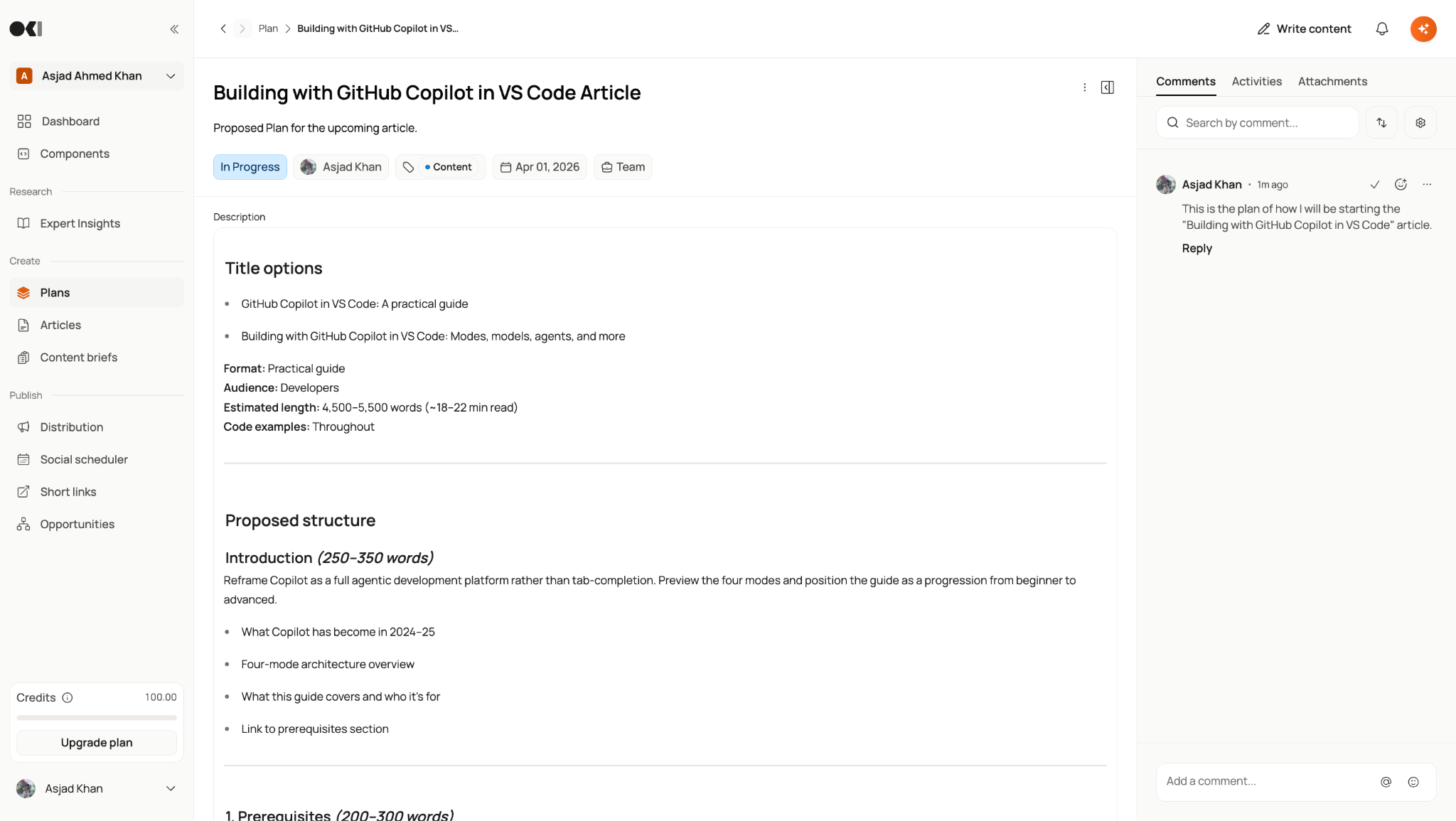
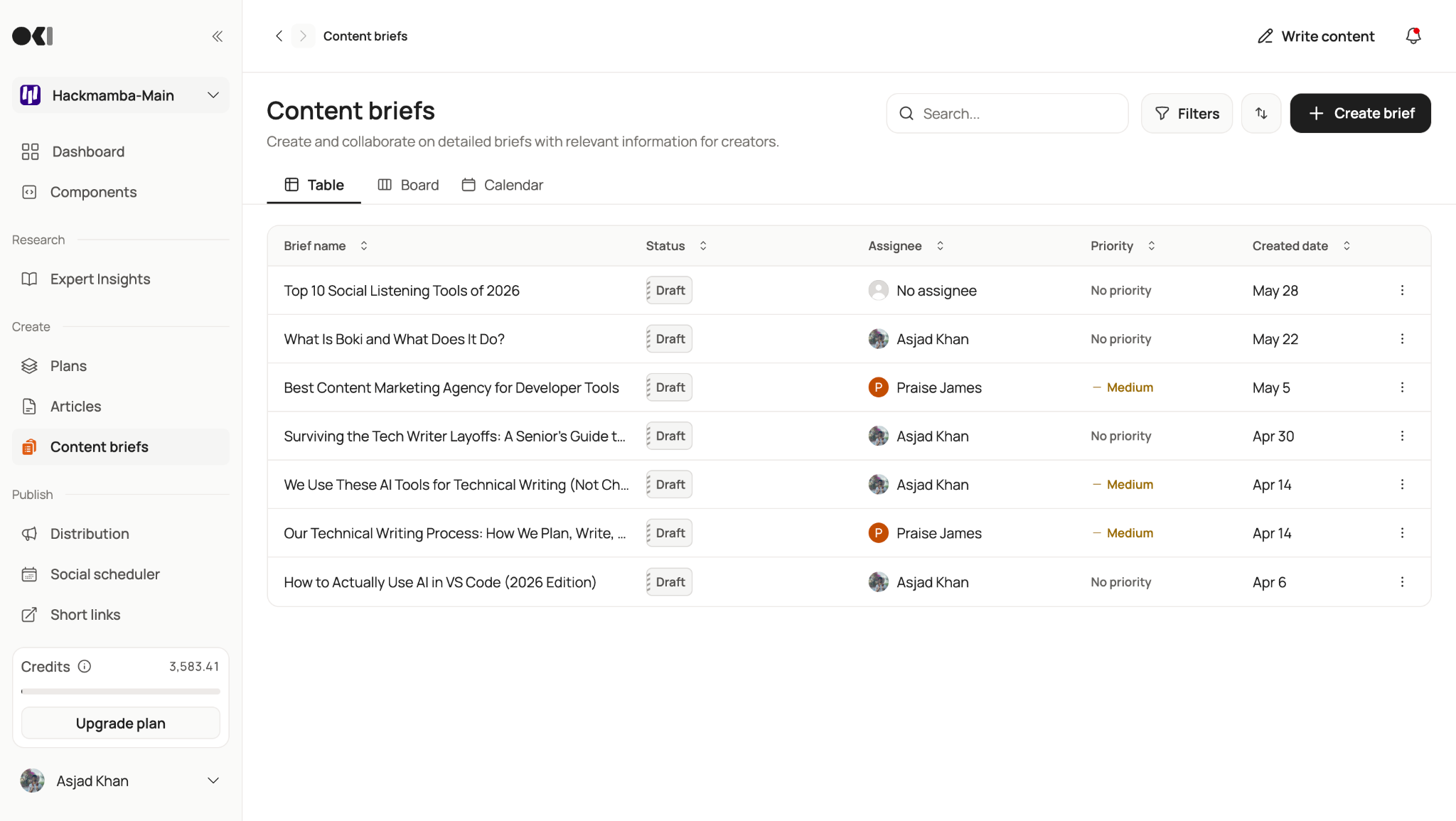
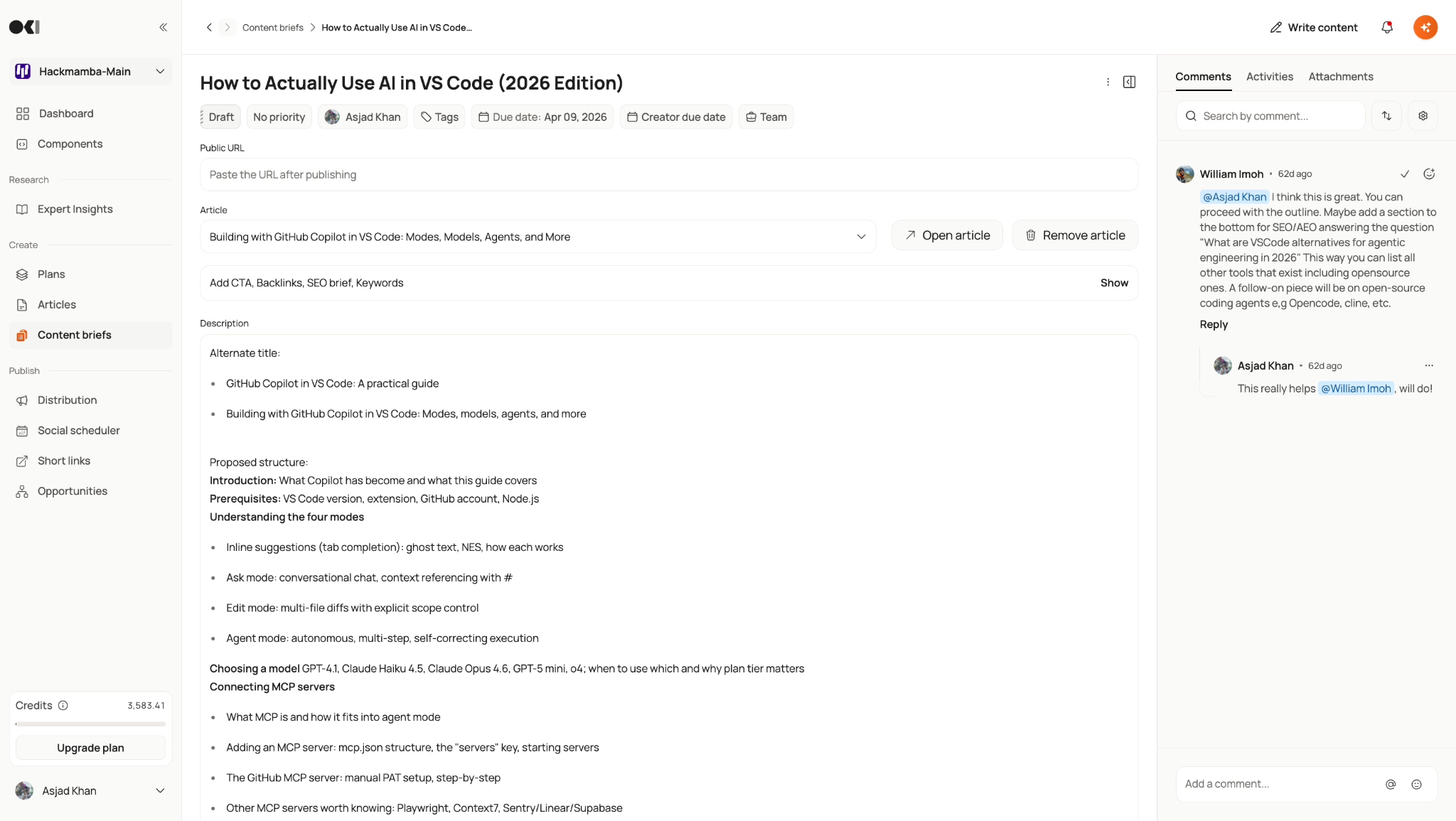
The review step in the middle of all this is where Boki does the most work, and it runs on three agents.
What are the three Boki agents?
Boki’s agents divide along a simple line. One works ahead of the writing, and the others work on what has been written.
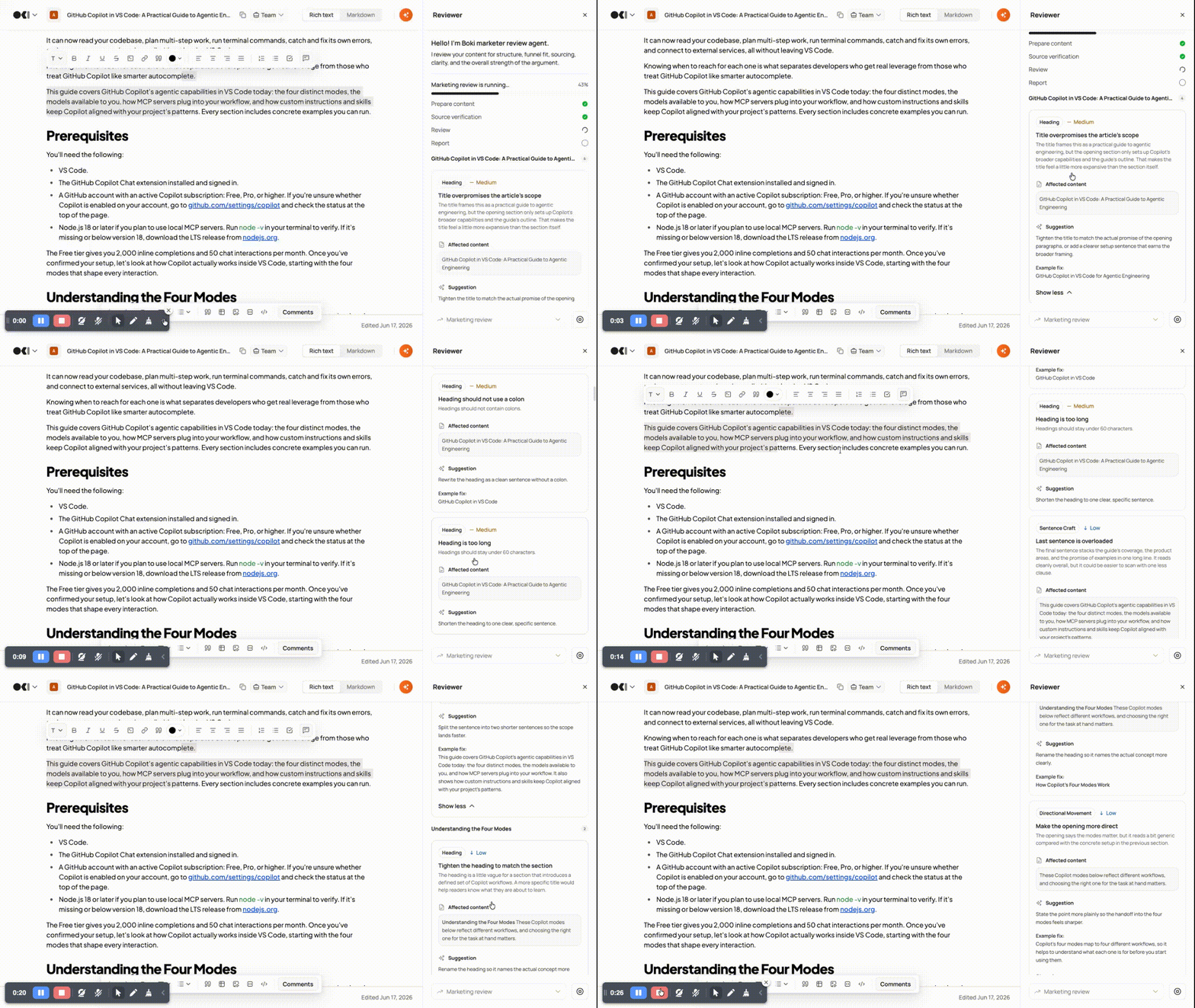
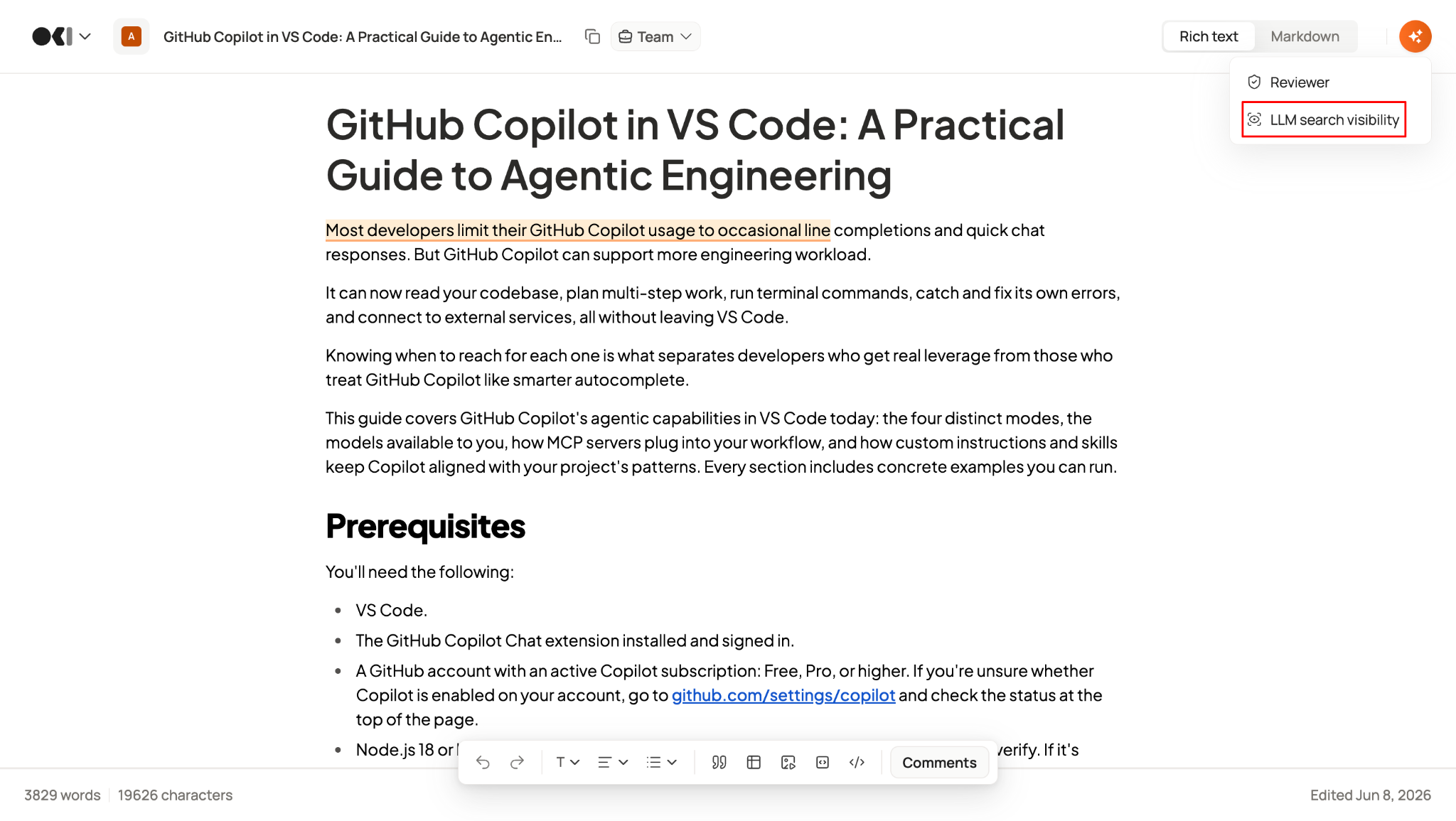
The first is the researcher, the agent behind the planning and drafting stages. It handles strategy, content creation, reasoning about a piece, providing suggestions, and conducting deep research on a topic. To do that, it has a web search tool, a virtual sandbox for running code samples when needed, a connection to an MCP via custom instructions, and access to the team’s skills. The second is the reviewer, which runs inside the content editor on what already exists, and it works from a different set of skills than the researcher. In the editor, it appears as two review agents, accessible from the same panel in the top right. They are the Technical agent, the Marketer agent (which is clubbed with Reviewer), and the LLM search visibility agent. Each introduces itself and reviews against its own standards.
What sits under all of them is the same mechanism. Boki runs on frontier models that the team directs with guardrails, giving the model a direction to follow and a set of evals to check against, supplied as skills. As William frames it, “we trust that these Frontier models are super smart, they just need to check for these evals that we have provided them in the form of skills.” The model does the reasoning, and the skills keep it checking for the things Hackmamba cares about. ,
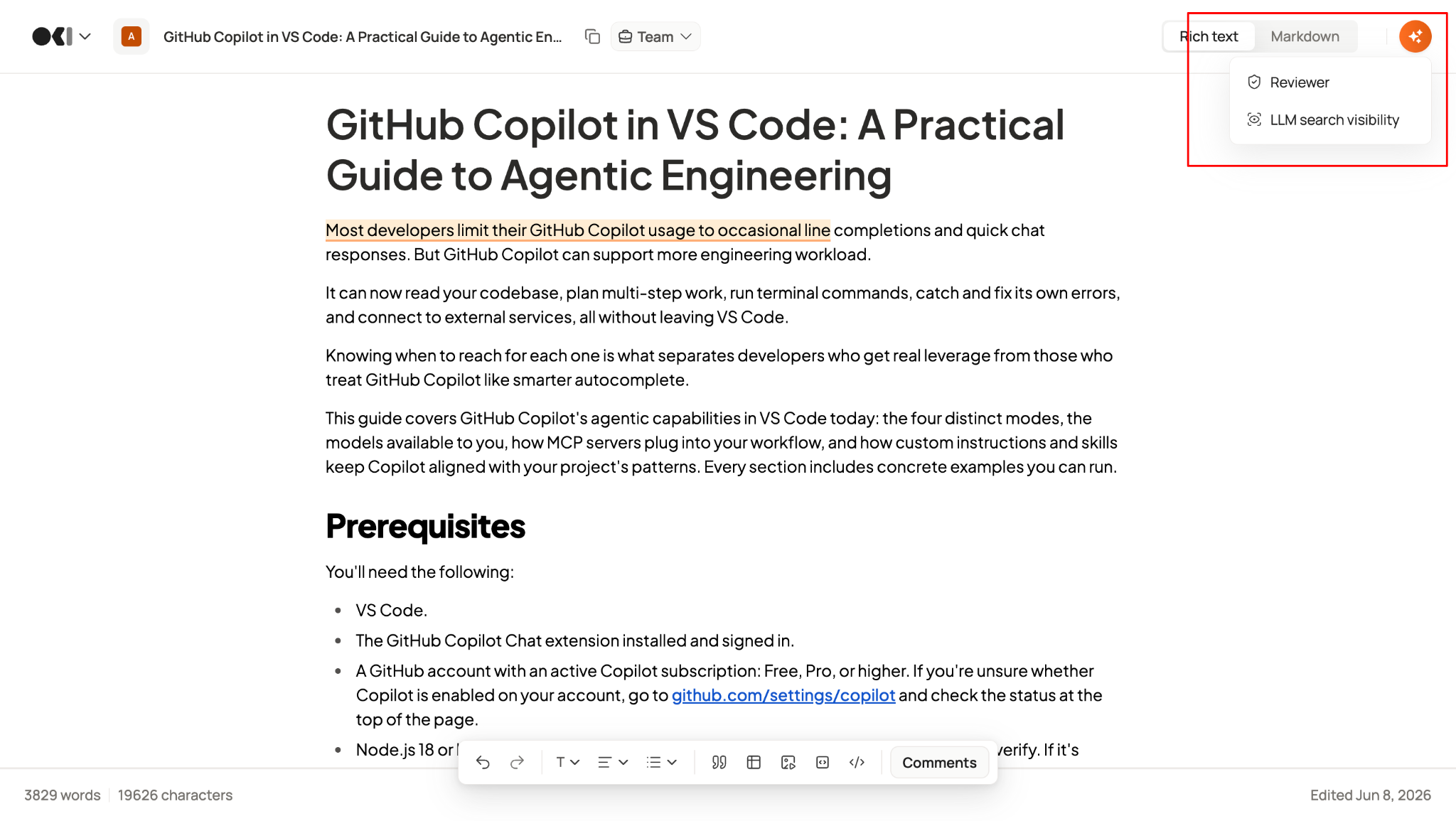
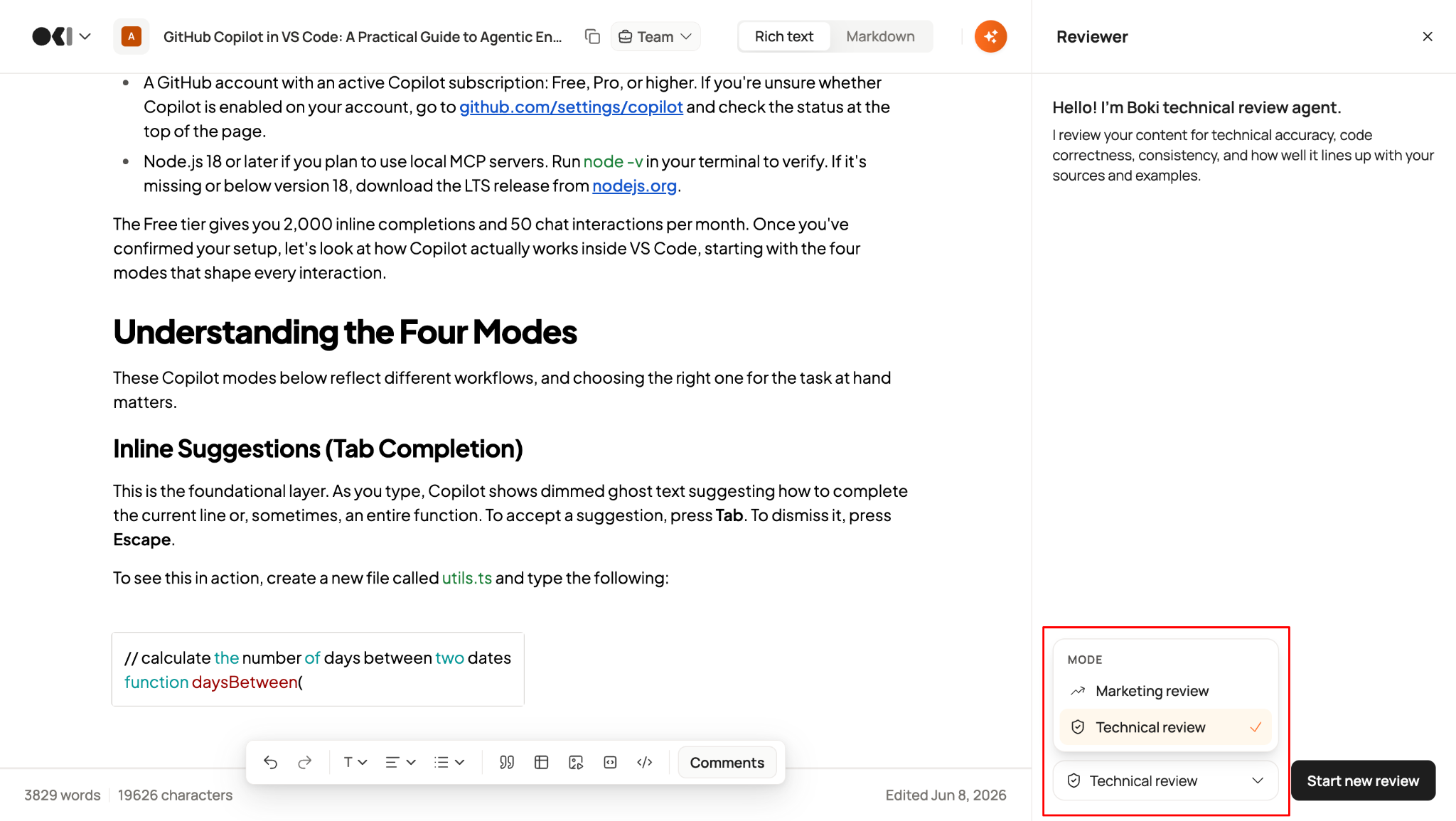
Technical agent The Technical agent reviews the draft for technical accuracy before it ever reaches an engineer. It parses the code blocks in a piece, runs them in a sandboxed environment, and checks claims and references against the web. When it finds a problem, it flags the specific item with a severity level and a short note on what to fix.
What it catches is the kind of thing that usually sends a draft back to an engineer, like wrong syntax, outdated API references, or a claim in the prose that contradicts a figure stated elsewhere in the same piece. In one review, it flagged an incorrect requirement for the local MCP server. Based on our internal tracking across client projects, putting the review inside the editor cut writer-reviewer revision rounds by 65 percent.
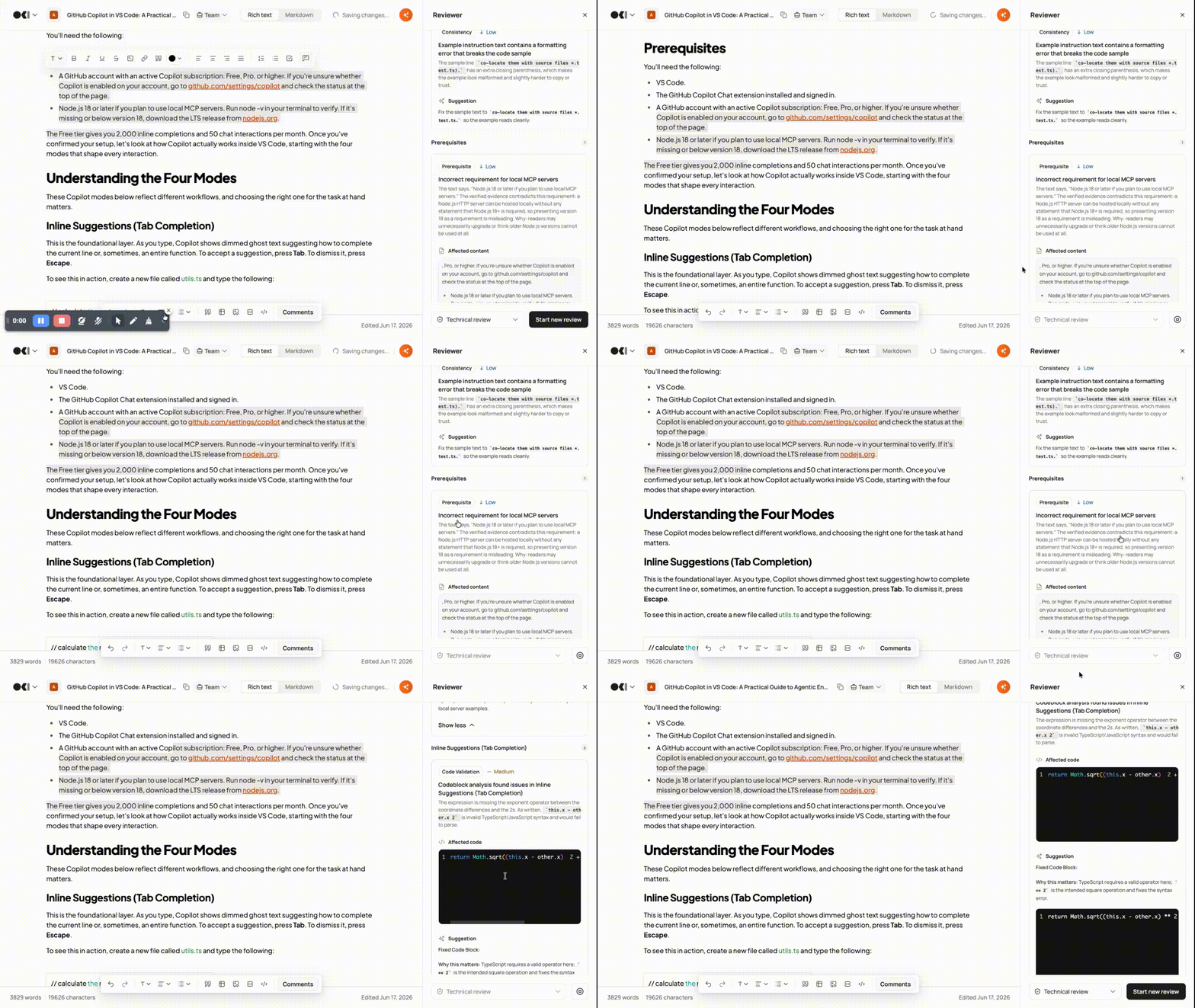
Marketer agent The Marketer agent reviews the same draft from a different angle. It introduces itself as reviewing content for structure, funnel fit, sourcing, clarity, and the overall strength of the argument. Where the Technical agent asks whether the code is right, the Marketer agent asks whether the piece does its job as content.
Its output follows the same pattern, flagged items with a severity and a note on what to change. In a marketing review of a Copilot guide, it pointed out that the opening paragraph leaned on promotional framing that read more like marketing copy than the practical guide it claimed to be, and it flagged a heading that used a colon against the team’s style. These are the judgments a content lead would normally make on a read-through, surfaced inline while the writer is still in the draft.
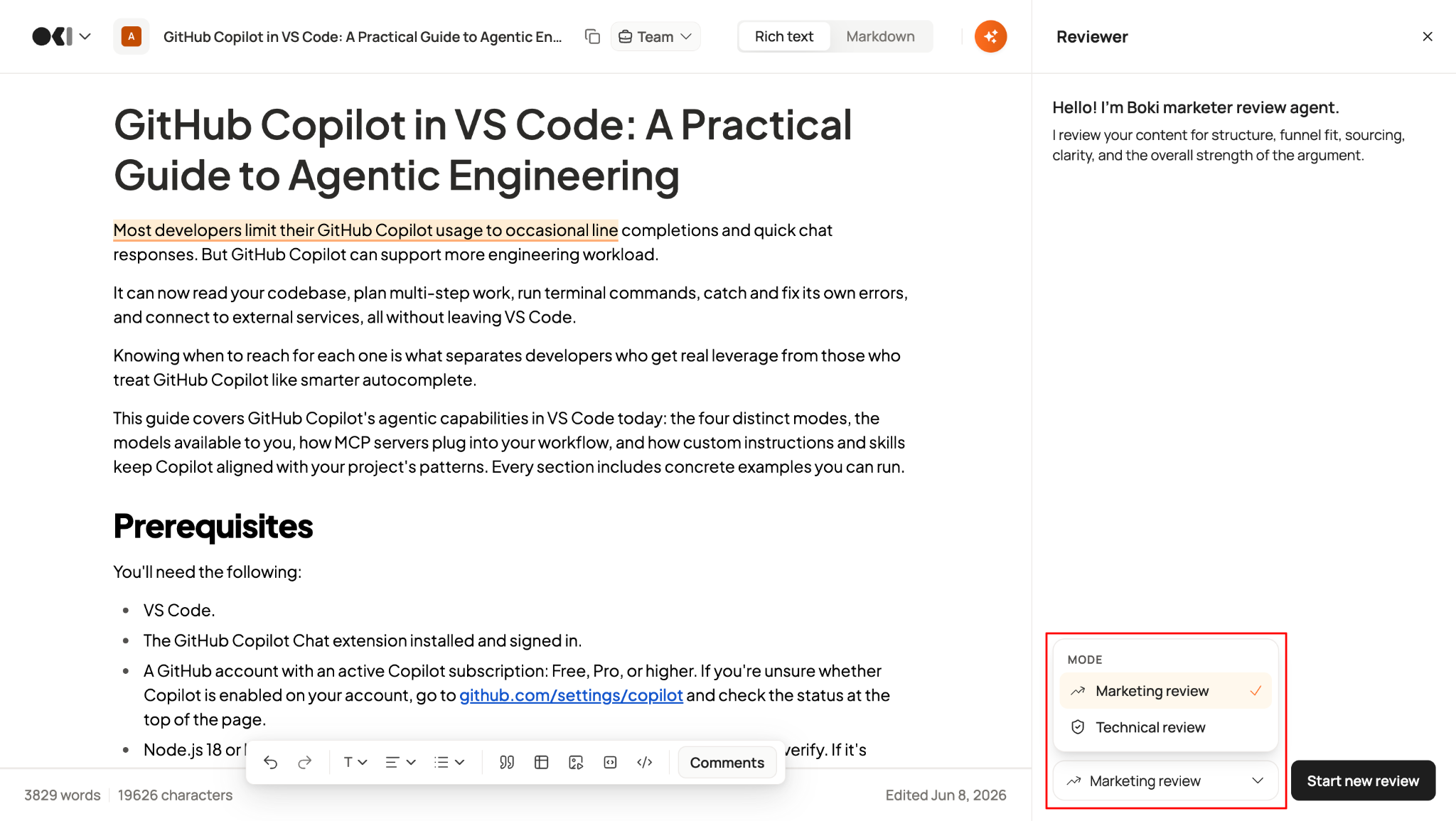
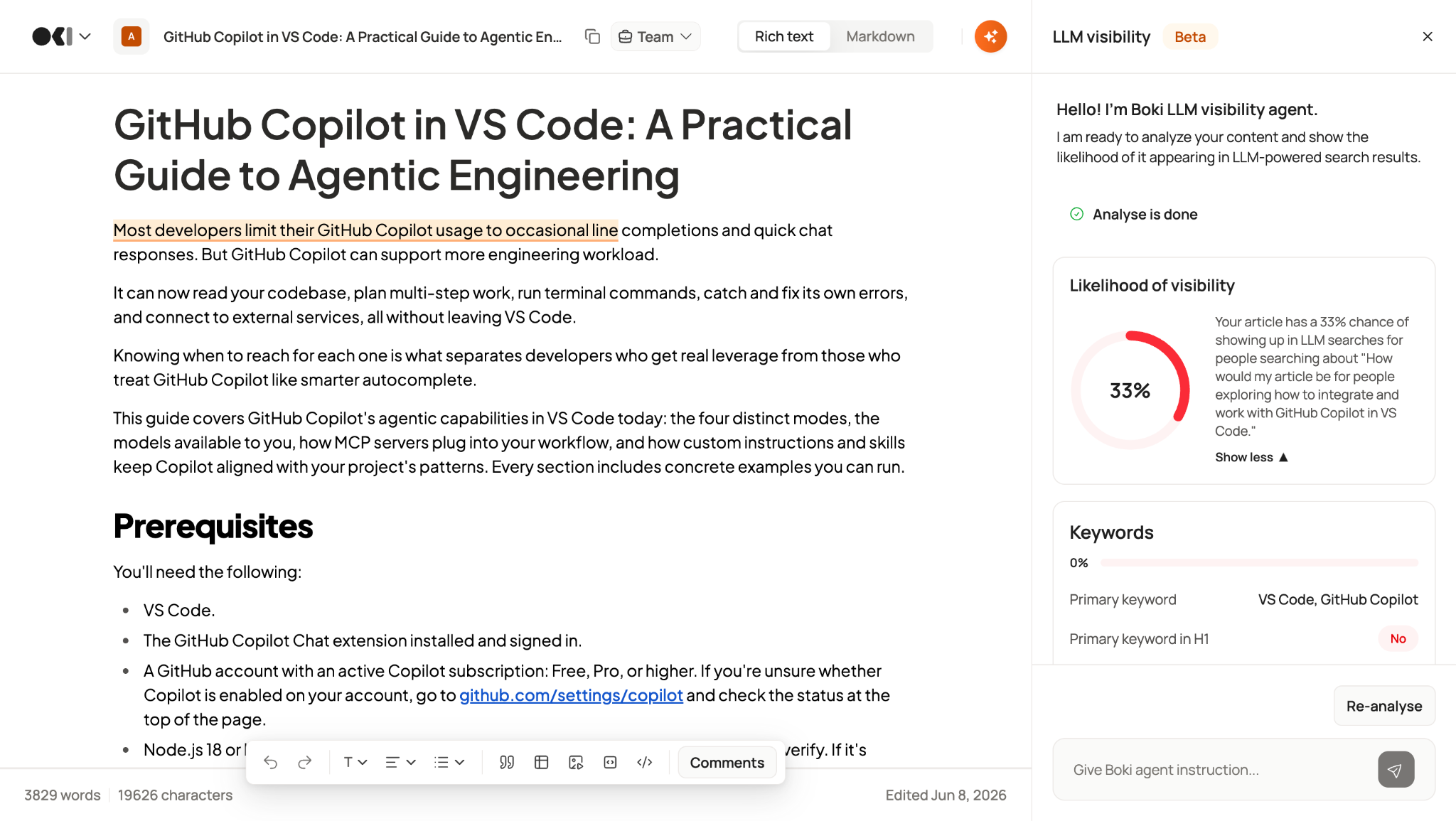
LLM search visibility agent LLM search visibility is how likely a piece of content is to surface when an AI model generates a recommendation, which is a different target from traditional keyword ranking. This matters in 2026 because a growing share of developers ask Perplexity or ChatGPT for a tool recommendation rather than running a search. The LLM search visibility agent analyzes a draft, estimates its likelihood of appearing in LLM-powered search results, and shows what to fix to improve it.
It returns a likelihood-of-visibility score for the article against a specific question a reader might ask, along with a keywords panel that checks whether the primary keyword appears in the H1. In one analysis, it gave a Copilot article a 33 percent chance of surfacing for someone asking how to integrate and work with GitHub Copilot in VS Code, and showed that the primary keyword was missing from the H1. The writer can act on that and re-run the analysis. The agent is in beta.re asking Perplexity or ChatGPT for tool recommendations
These three agents are part of a larger product, so it helps to see where they sit in the whole.
The seven features
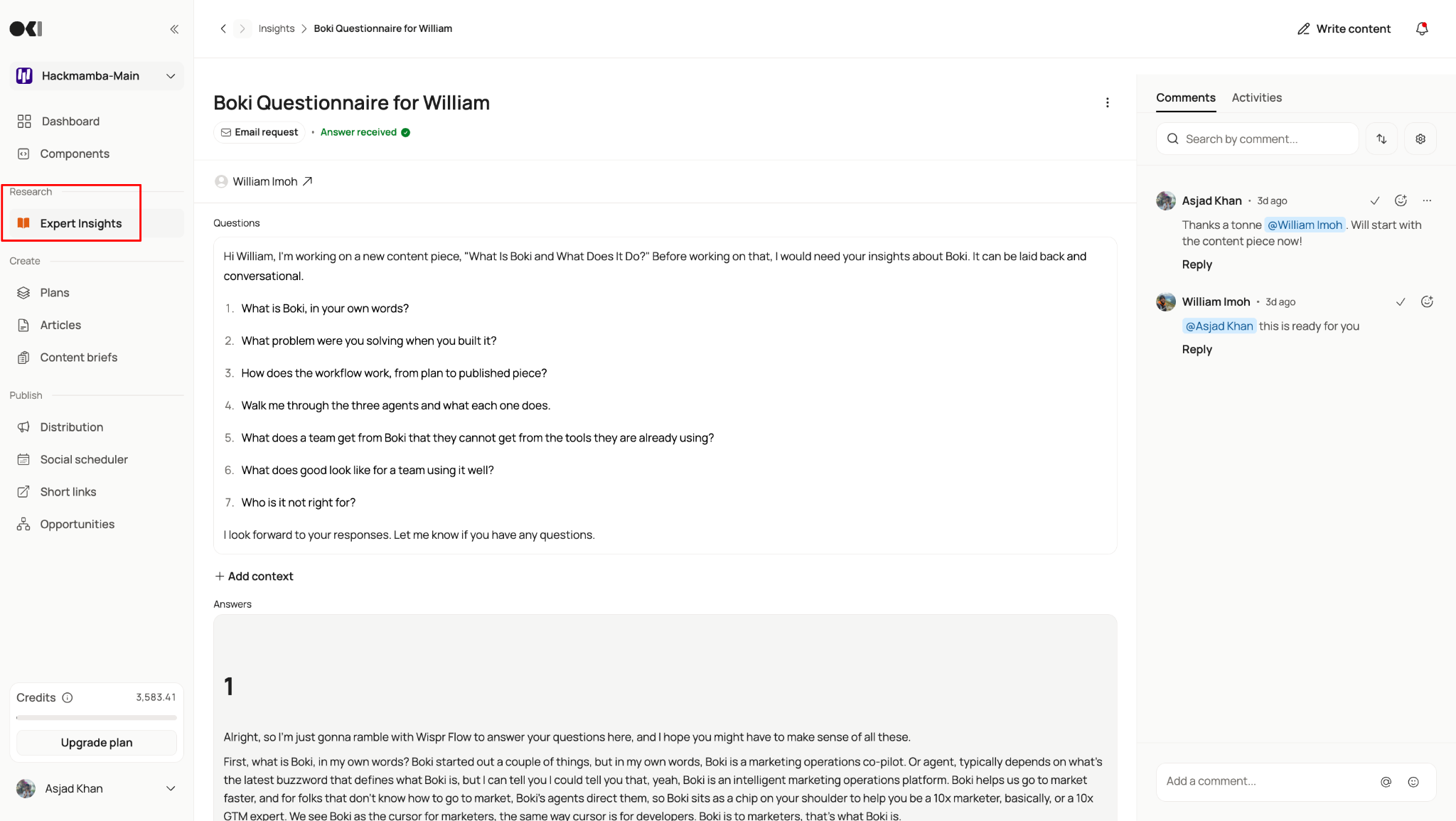
Boki’s homepage groups the product into seven features, each covering one stage of the work. Inside the app, these map onto a sidebar organized into three areas: Research, Create, and Publish. The names below are the feature names, with a note on where each one lives in the product.
Expert Insights Expert Insights lives under Research in the sidebar. It collects structured input from domain experts, either through an interview or a one-click email request, and stores it in the workspace alongside the strategy it informs. This matters most for technical content, where accuracy depends on knowledge the writing team does not always hold. A writer covering a product they did not build can pull the expert’s exact answers into the work instead of approximating. The insight stays close to the brief, so it is there when the writing starts.
Converting Campaigns Converting Campaigns is the planning layer, which shows up in the sidebar as Plans and the Content briefs that come out of them under Create. It gives the team opinionated workflows and agents that review a plan for gaps using context from across the whole workspace. Because the agent can see the other plans, briefs, and content in the workspace, its review of a new plan is grounded in what the team is already doing rather than treating each campaign as a standalone bet.
Winning Content Winning Content is the collaborative editor where the writing happens, reached through Articles under Create. It supports rich text and Markdown, and the brief stays visible inside it. The review agents run here, and the editor uses the team’s product information and brand voice as context for the agents’ suggestions. Research, briefs, and review all come together in this editor as the draft takes shape.
Specialized Agents Specialized Agents is where the three review agents live: the Technical agent, the Marketer agent, and the LLM search visibility agent. You reach them from inside the Articles editor, run against the piece you are working on. The point of grouping them this way is that these are agents with specific jobs in the content workflow, each reviewing against its own set of standards, rather than one general-purpose assistant answering whatever you type. Each one is covered in full above.
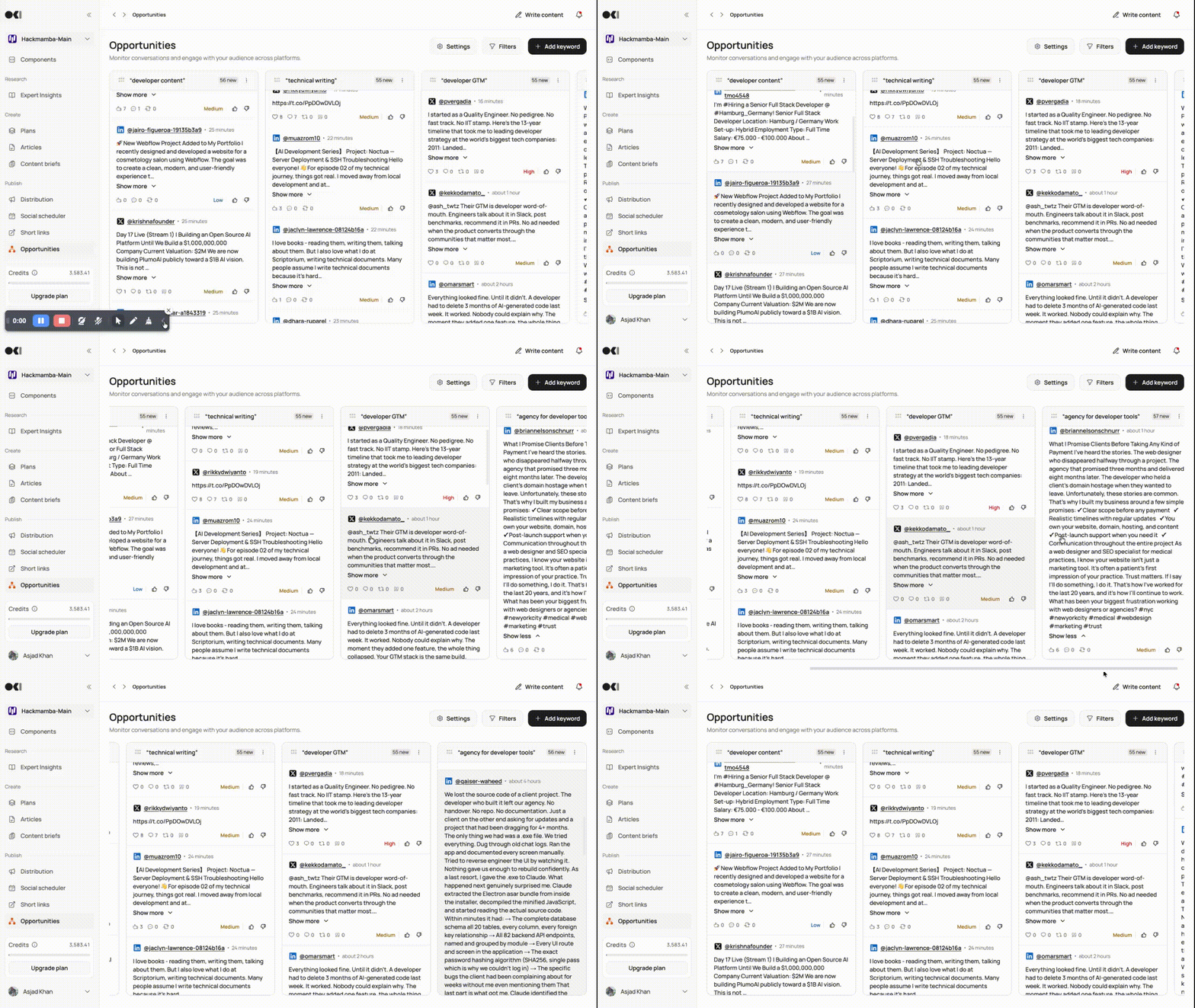
Hidden Opportunities Hidden Opportunities is the Opportunities item under Publish. It monitors brand mentions and product intent signals across platforms and surfaces them as streams the team can act on. It watches conversations tied to keywords the team adds, groups them into streams like “developer content” or “technical writing,” and ranks each item by how relevant it is. A team can see a developer posting about a problem their product solves and reach that person while the conversation is live, instead of finding it weeks later.
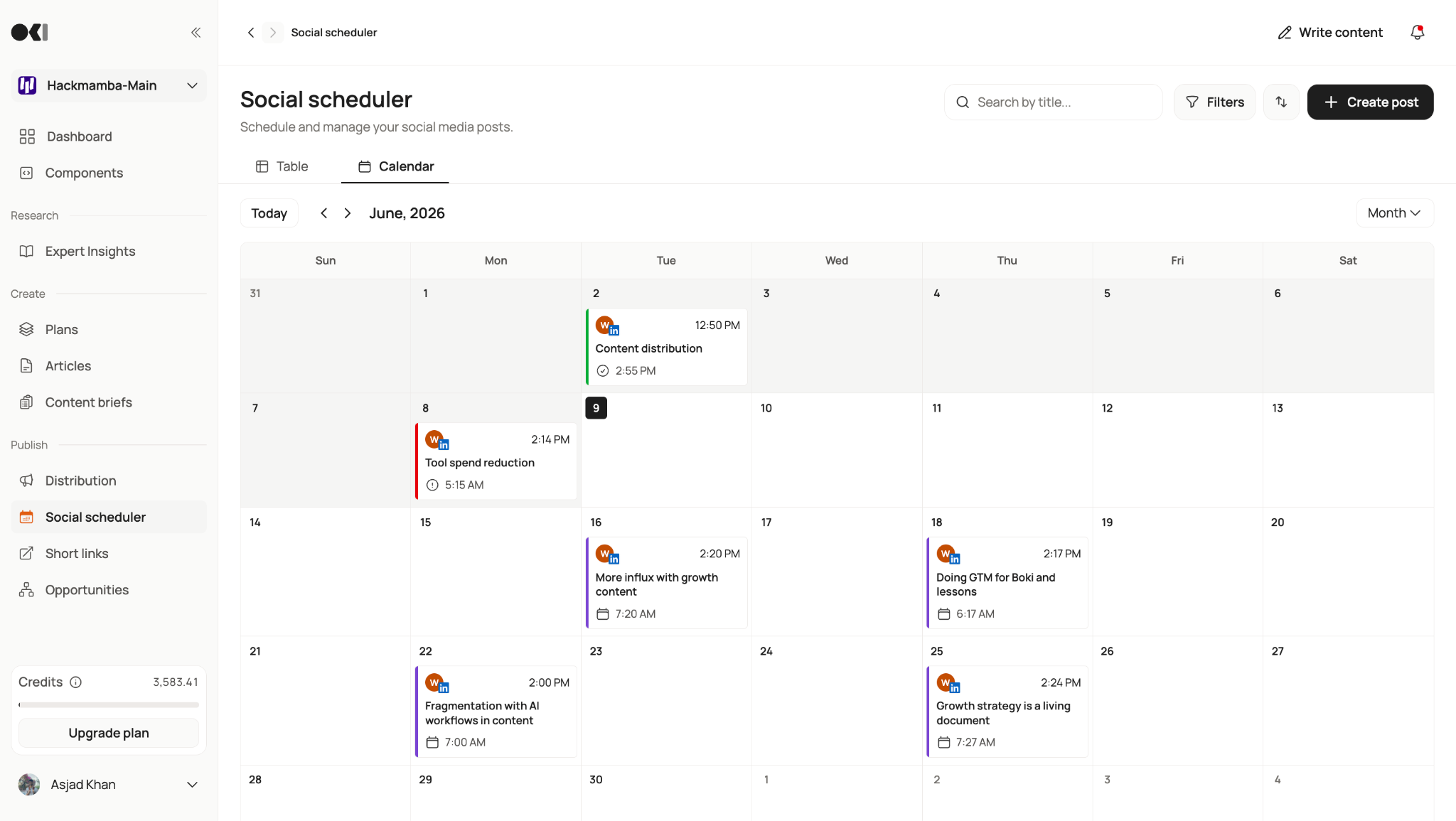
Coherent Distribution Coherent Distribution covers the Distribution and Social scheduler items under Publish. It handles scheduling to X and LinkedIn, a shared content calendar, and team approval workflows. Because distribution shares context with the rest of the workspace, a scheduled social post knows which campaign it belongs to. The team is not rebuilding context in a separate scheduling tool that has no idea what the post is promoting.
Working Attribution Working Attribution is the Short Links item under Publish. Short links are created inside the workspace, with performance data feeding back in. The agents use that data to iterate on strategy based on what is working. The value compounds because attribution sits alongside content creation. The data on which piece drove results sits next to the system that plans and writes the next one, so each round of content is informed by the last. That last point sets up the real question, which is who all of this serves. Boki is not built for everyone.
Who is Boki built for?
Boki fits teams running product-led growth with an emphasis on organic channels. Asked what good looks like for a team using it well, William describes it as “shipping content and marketing campaigns faster with conviction, collaborating in the same workspace.” He is equally direct about the edges. It is built for marketers focused on organic growth and for teams designing and running their own paid campaigns inside a single framework. It is a weaker fit for a sales-led organization, where dedicated sales platforms make more sense. Within the right fit, three groups get the most out of it.
- Technical writers and devrel teams producing tutorials, API docs, and technical blog content. The Technical agent removes the engineering review bottleneck, since a writer can clear most accuracy issues before an engineer ever sees the draft.
- In-house content teams at devtools companies scaling production without adding headcount. The full workflow lives in one place, so the team ships more without hiring to manage tool sprawl.
- Content agencies managing several clients at once. Because each workspace is isolated, an editor can maintain quality across all of them without rebuilding context every time they switch clients. Unlimited workspaces on the Scale plan keep each client’s work separated.
The teams already using it describe the same shift in different words: “We are shipping great content twice as fast, without having to deal with tons of tools built for project management instead of content operations.” William Imoh, Founder and CEO of Hackmamba.
“Finally, a content operations platform for modern marketers.” Mickey Aharony, Director of Content. “As a technical writer and developer advocate, this is a fresh breath to content operations and handling content with marketing teams.” Kenny Eze, Founder of DXMentorship. If your team fits that picture, here is what it costs to start.
Pricing
| Plan | Price | Documents/month | Agent runs/month | Workspaces |
|---|---|---|---|---|
| Starter | Free forever | 50 | 10 per agent | 1 |
| Growth | $97/month | 500 | 100 per agent | 5 |
| Scale | $349/month | 2,000 | Unlimited | Unlimited |
All plans include unlimited plans and briefs, unlimited team members, and unlimited social posts. Annual billing is 20 percent cheaper than monthly. A few common questions arise once teams start taking Boki seriously.
FAQ
What is Boki used for? Boki handles plans, briefs, writing, technical review, distribution, and attribution in one workspace. It is built for teams producing technical and marketing content.
How does the technical agent work? It sits inside the content editor and checks drafts for accuracy before the content reaches an engineer. It catches wrong syntax, outdated API references, and missing parameters inline, and it can run code blocks in a sandbox to confirm they work.
What agents does Boki have? Three: the Marketer agent, the Technical agent, and the LLM search visibility agent. All three run inside the content editor.
What is the difference between Boki and Notion or ClickUp? Boki is built for content operations. Briefs are tied to articles inside plans, three specialist agents run in the editor, Markdown is supported natively, and attribution is tracked in the same workspace.
Who makes Boki? Hackmamba, a developer marketing agency that runs its own client content operations on the platform.
Is Boki free? Yes. The Starter plan is free forever, with no credit card required, 50 documents per month, and unlimited plans and briefs.